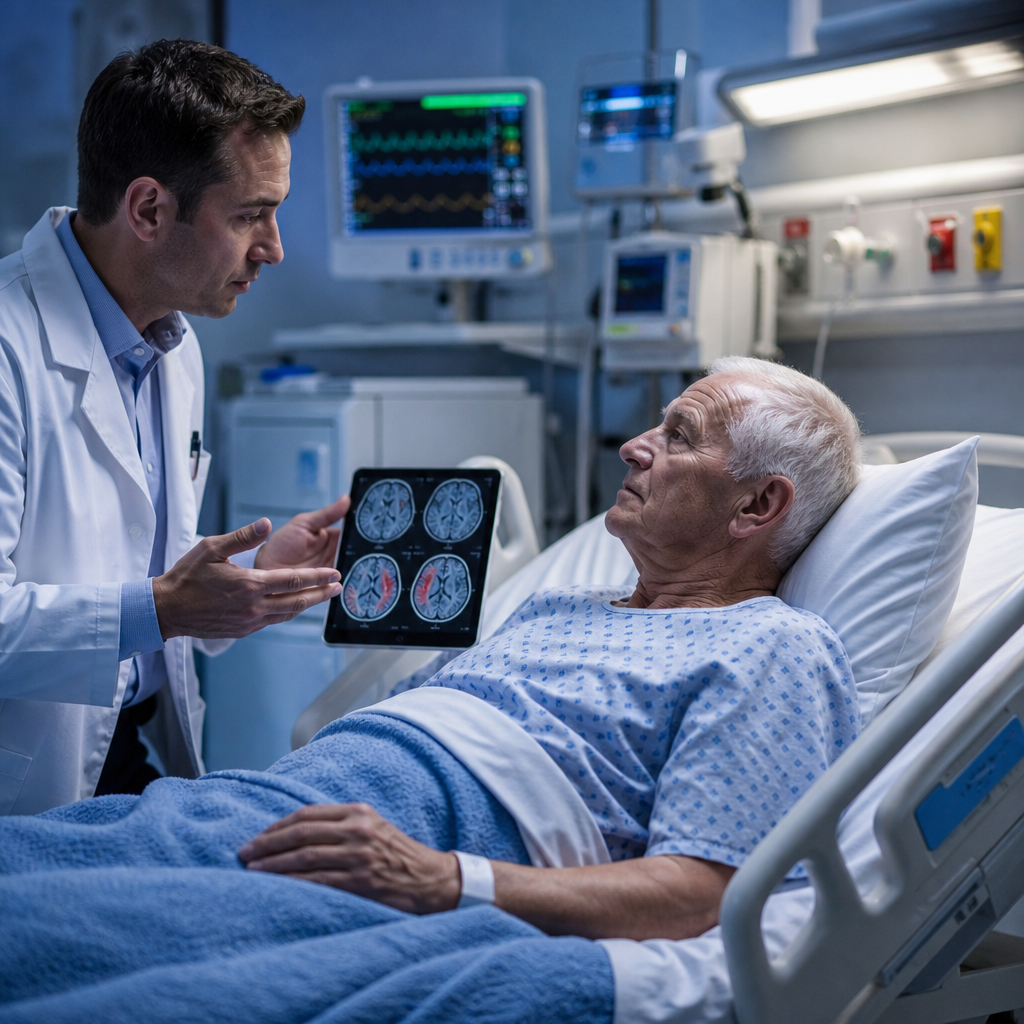
A stroke can happen without warning, and the minutes that follow are among the most critical in a person’s life. Of all stroke types, ischemic stroke is by far the most common, accounting for nearly 87 percent of all cases worldwide. Understanding how it is diagnosed, treated, and managed can mean the difference between full recovery and lasting disability. As medical science continues to advance, so do the options available to patients — but awareness remains the most powerful tool of all.
What Is an Ischemic Stroke?
An ischemic stroke occurs when a blood clot or other obstruction blocks an artery supplying blood to the brain. Without a steady flow of oxygen-rich blood, brain cells begin to die within minutes. The location and size of the blockage determine which functions are affected — speech, movement, memory, or vision can all be compromised depending on the region of the brain involved.
There are two primary subtypes: thrombotic strokes, caused by a clot forming directly in a brain artery, and embolic strokes, where a clot originating elsewhere in the body — often the heart — travels to the brain. Both require immediate medical attention, and both are treated with urgency in specialized stroke centers equipped with the right technology and expertise.
Recognizing the Warning Signs
The acronym FAST — Face drooping, Arm weakness, Speech difficulty, Time to call emergency services — remains one of the most effective public health tools for stroke recognition. Additional symptoms include sudden severe headache with no known cause, confusion, trouble seeing in one or both eyes, and loss of balance or coordination. If any of these signs appear, emergency services should be contacted immediately. Every second counts.
The Science Behind Modern Stroke Treatment
The landscape of ischemic stroke treatment has transformed dramatically over the past two decades. Where once supportive care was the primary option, today’s interventions can restore blood flow, limit brain damage, and dramatically improve outcomes. Two cornerstone treatments dominate current clinical practice: intravenous thrombolysis and mechanical thrombectomy.
Intravenous thrombolysis using tissue plasminogen activator (tPA) works by dissolving the clot chemically. It must be administered within a narrow time window — typically within 4.5 hours of symptom onset — making rapid hospital arrival essential. Mechanical thrombectomy, on the other hand, involves physically removing the clot using a catheter-based device. This procedure has extended the treatment window for eligible patients and has shown remarkable results even when performed up to 24 hours after symptom onset in carefully selected cases.
Evidence Supporting Thrombectomy Outcomes
Research published in leading medical journals has consistently demonstrated the superiority of combined approaches over thrombolysis alone for large vessel occlusions. A landmark study examining stroke care outcomes across diverse patient populations found that access to specialized neurovascular units significantly reduced mortality and improved functional independence at 90 days. You can explore this peer-reviewed research on stroke care disparities and outcomes to understand how treatment access shapes long-term recovery trajectories.
The Role of Specialized Stroke Centers
Not all hospitals are equipped to handle complex stroke cases. Comprehensive stroke centers offer around-the-clock access to neurologists, neuroradiologists, and interventional specialists who work as a coordinated team. Advanced imaging — including CT angiography and MRI perfusion studies — allows clinicians to identify salvageable brain tissue and determine the most appropriate course of action within minutes of a patient’s arrival.
The importance of this infrastructure cannot be overstated. Studies consistently show that patients treated at high-volume stroke centers experience better outcomes, fewer complications, and shorter hospital stays. For families navigating a stroke emergency, knowing which facility to go to in advance can save precious time.
Post-Stroke Rehabilitation and Secondary Prevention
Acute treatment is only the beginning. Once a patient is stabilized, the focus shifts to rehabilitation and preventing a recurrence. Stroke rehabilitation is a multidisciplinary process involving physiotherapists, occupational therapists, speech-language pathologists, and neuropsychologists. The brain’s remarkable capacity for neuroplasticity means that with consistent, targeted therapy, many patients regain significant function over weeks and months.
Secondary prevention strategies are equally critical. Antiplatelet medications, anticoagulants for patients with atrial fibrillation, blood pressure management, cholesterol control, and lifestyle modifications all play a role in reducing the risk of a second stroke. Patients are also screened for underlying conditions — such as carotid artery stenosis or patent foramen ovale — that may require surgical or interventional correction.
Choosing the Right Care: What Patients in the UAE Should Know
For residents and visitors in the UAE, access to world-class neurovascular care is closer than many realize. Cleveland Clinic Abu Dhabi’s neuro-vascular stroke program brings together internationally trained specialists and cutting-edge technology under one roof. Seeking timely ischemic stroke treatment at a center with dedicated stroke protocols, 24/7 imaging capabilities, and a multidisciplinary team can dramatically improve a patient’s chances of recovery and long-term independence.
Cleveland Clinic Abu Dhabi: A Neurovascular Center of Excellence
Cleveland Clinic Abu Dhabi operates as part of one of the most respected healthcare networks in the world. Its neurovascular program is built on evidence-based protocols developed and refined over decades of clinical research. The team manages the full spectrum of cerebrovascular conditions — from transient ischemic attacks to complex large vessel occlusions — using the same standards of care applied at Cleveland Clinic’s flagship facilities in the United States.
Patients benefit from seamless coordination between emergency medicine, neurology, neuroradiology, and neurosurgery. The center’s commitment to continuous quality improvement means that outcomes are regularly benchmarked against international standards, ensuring that every patient receives care that reflects the latest advances in stroke medicine.
Broader Health Awareness and Preventive Care
Stroke prevention is deeply connected to overall cardiovascular and metabolic health. Conditions such as obesity, hypertension, and diabetes are among the leading modifiable risk factors for stroke. Increasingly, patients are taking a more proactive approach to their health — seeking elective procedures and wellness interventions that address underlying risk factors before a crisis occurs. For those exploring body contouring and wellness options in the region, resources like this guide to tummy tuck procedures in Dubai reflect a growing culture of health-conscious decision-making that extends beyond emergency care into long-term wellbeing.
Conclusion: Time, Knowledge, and the Right Team
Ischemic stroke remains one of the most time-sensitive medical emergencies in existence. The convergence of rapid public recognition, swift emergency response, and expert hospital-based care creates the conditions for the best possible outcomes. Advances in imaging, clot retrieval technology, and rehabilitation science have transformed what was once a frequently devastating diagnosis into a condition that many patients survive with meaningful recovery.
Whether you are a patient, a caregiver, or simply someone who wants to be prepared, understanding the fundamentals of stroke recognition and treatment is an investment in your own safety and that of the people you love. In a region like the UAE, where specialized neurovascular care is available at internationally accredited centers, there is every reason to act quickly and choose wisely when it matters most.
READ ALSO: Trenbolone Acetate: An In-Depth Look at One of Bodybuilding’s Most Powerful Transformation Compounds