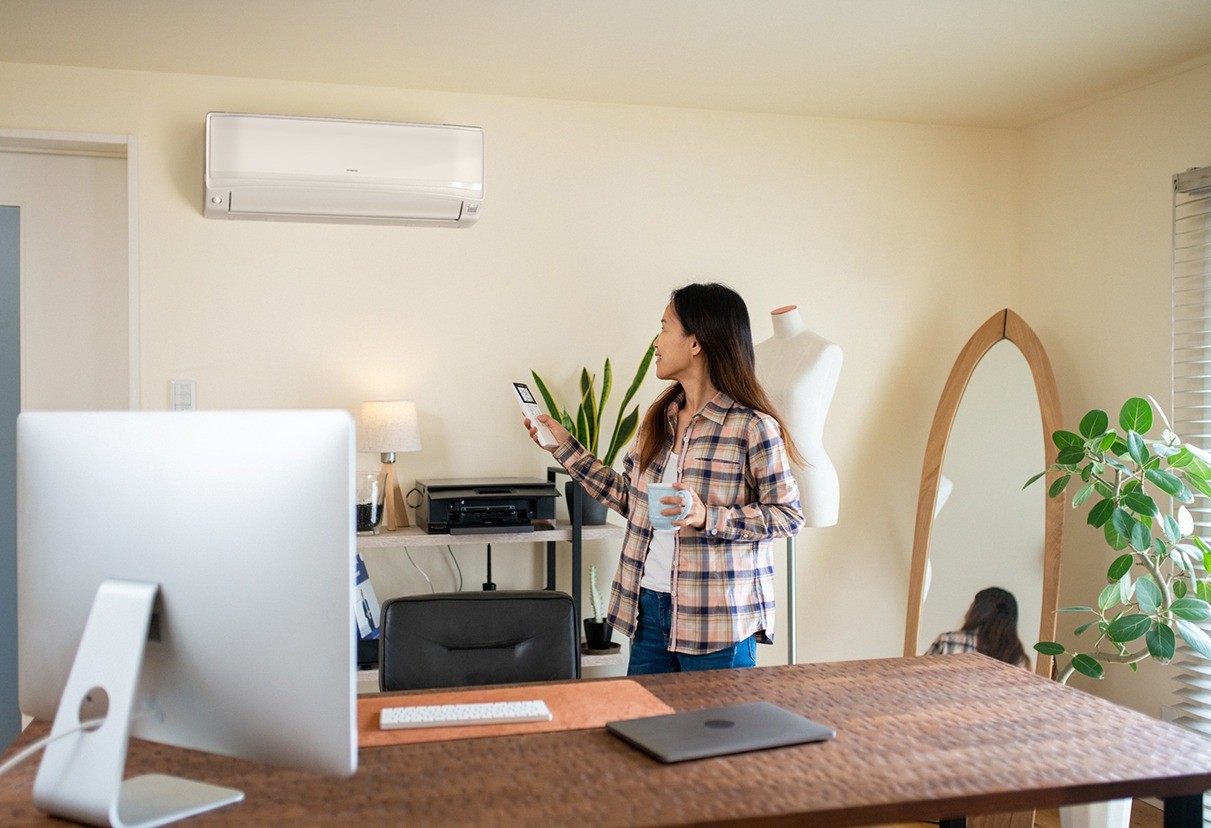
Is there anything worse than hearing your air conditioner humming loudly, seeing your energy bill skyrocket, yet still feeling sticky and hot in your own living room?
We often blame the AC unit itself when the house feels warm, assuming we need a bigger, more expensive machine. However, the culprit is often much simpler: poor circulation. If the air cannot move freely, your system has to work twice as hard to achieve half the results.
With energy prices trending upward in 2026, efficiency isn’t just about comfort—it’s about financial survival. Here is your practical guide on how to improve airflow in the house and improve AC efficiency, ranging from free 5-minute fixes to smart home upgrades.
Contents
- 1 1. The “Vampire” Check: Unblock Your Vents
- 2 2. Leverage the “Stack Effect” with Ceiling Fans
- 3 3. The Filter Factor: Let Your AC Breathe
- 4 4. Seal the Leaks (The Invisible Drafts)
- 5 5. Clean the Outdoor Condenser
- 6 6. Utilize the “Fan On” Setting Strategically
- 7 7. Inspect Your Ductwork
- 8 Conclusion: Comfort is a System
1. The “Vampire” Check: Unblock Your Vents
It sounds obvious, but it is the most common mistake homeowners make. Over time, we rearrange furniture, add heavy drapes, or place rugs that inadvertently cover supply or return vents.
- The Fix: Walk through every room. If a sofa, bookshelf, or long curtain is blocking a vent, the air is being trapped before it can circulate. Even a partial blockage forces your AC to increase static pressure, which kills efficiency. Give your vents at least 18 inches of breathing room.
2. Leverage the “Stack Effect” with Ceiling Fans
A common misconception is that ceiling fans cool the air; they actually cool people via the wind-chill effect. However, they are vital for moving stagnant air.
- The Trick: In the summer, ensure your ceiling fans are spinning counter-clockwise. This pushes cool air down towards the floor.
- Pro Tip: If you have a two-story home, the upper floor is naturally hotter (heat rises). Run upstairs fans at a higher speed to break up the stratification of hot air and help it mix with the conditioned air coming from the vents.
3. The Filter Factor: Let Your AC Breathe
Imagine trying to run a marathon while breathing through a thick wool scarf. That is what a dirty air filter does to your HVAC system. A clogged filter restricts airflow efficiently, causing the evaporator coil to freeze up and potentially damaging the compressor.
- The Fix: Check your filter every 30 days during peak cooling season. Upgrading to a slightly higher quality filter can improve air quality, but be careful—buying the highest “HEPA” rating isn’t always best for older systems as they can restrict airflow too much. Aim for a “MERV” rating between 8 and 11 for the best balance of flow and filtration.
4. Seal the Leaks (The Invisible Drafts)
You cannot improve airflow inside if you are losing all your pressure to the outside. Leaky windows and doors create a vacuum effect. As cool air escapes, hot, humid air is sucked in through cracks in the attic or basement to replace it.
- The Fix: Use a simple stick of incense or a smoke pencil near window frames and doors while the AC is running. If the smoke blows sideways, you have a leak. Cheap weatherstripping and a tube of caulk can improve your AC efficiency by preventing this thermal loss.
5. Clean the Outdoor Condenser
Your AC system is a loop. It absorbs heat from inside and dumps it outside via the condenser unit (the big metal box in your yard). If that unit is choked by vines, dirt, or grass clippings, it cannot release the heat.
- The Fix: Ensure there is at least 2 feet of clearance around the outdoor unit. Use a garden hose (on a gentle setting) to wash dust and pollen off the fins. When the unit can dump heat faster, it cools your home faster.
6. Utilize the “Fan On” Setting Strategically
Most thermostats have two fan settings: “Auto” and “On.”
- Auto: The fan only runs when the AC is actively cooling.
- On: The fan runs 24/7, constantly circulating air even when the compressor is off.
- The Strategy: While leaving the fan “On” all the time uses more electricity, it is a great temporary trick to improve airflow in the house during a heatwave. It keeps the air mixing continuously, preventing hot and cold spots from forming in different rooms.
7. Inspect Your Ductwork
If you have tried everything and airflow is still weak, the issue might be in the lungs of your home: the ducts. According to Energy Star, the average home loses 20-30% of the air that moves through the duct system due to leaks, holes, and poorly connected ducts.
- The Fix: Inspect exposed ducts in basements or attics. If you see gaps or crushed sections, use metal tape (foil tape)—not duct tape, which peels off—to seal them.
Conclusion: Comfort is a System
Improving your home’s cooling isn’t just about turning the thermostat down; it is about creating a path for air to travel smoothly. By unblocking vents, maintaining your filters, and sealing your envelope, you can drastically improve AC efficiency and extend the life of your unit.
However, every home is unique, and sometimes you need specific inspiration to tackle stubborn heating and cooling challenges.
This is where Home Comfort Experts comes in. If you are looking for further education and innovative ideas about home improvements, homecomfortexperts.co.uk is a valuable resource. Whether you are researching the latest in HVAC technology or looking for simple DIY tips to make your living space more habitable, their website provides the expert guidance needed to turn a house into a truly comfortable home.
READ ALSO: Creating Ambience with Layered Lighting in Your Living Space